Professional repiping services for Carson and South Bay homes.
When leaks stop being isolated events and start being a pattern, the pipe system itself is the problem. Repiping replaces failing galvanized steel or worn copper with new copper pipe or PEX throughout the home. Carson Pipe Pros plans repiping room by room for Carson and South Bay homes. Call (123) 456-7890 to discuss whether repair or repiping fits your house.
Repiping conversations usually start with a pattern: a pinhole leak repaired in the spring, another in a different wall by fall, water that runs rusty after a vacation, and pressure that has faded so gradually you adjusted without noticing. Each sign points the same direction. Galvanized steel corrodes and narrows from the inside, and older copper pipe thinned by hard water chemistry does not heal between leaks.
Repairing each leak as it appears is reasonable at first. It stops making sense when the leaks multiply, because every repair opens a wall, fixes one weak spot, and leaves equally aged pipe on both sides of it. At that point the question changes from fixing this leak to replacing the system that keeps producing them, and an honest assessment compares the recent repair history against the scope of a full or partial repipe.
Each wall opened for a leak repair is also a chance to read the system honestly. Pipe visible inside that opening shows its condition along the exposed run, heavy internal scale at cut ends, green corrosion blooms on copper, or galvanized threads crumbling as fittings turn. A careful plumber reports what that window revealed, because it converts the repipe decision from a sales conversation into an evidence conversation. Homeowners in Carson deserve that clarity most of all at this stage, when money spent repeating small repairs and money spent replacing the system start crossing, and the right answer depends on the metal itself.
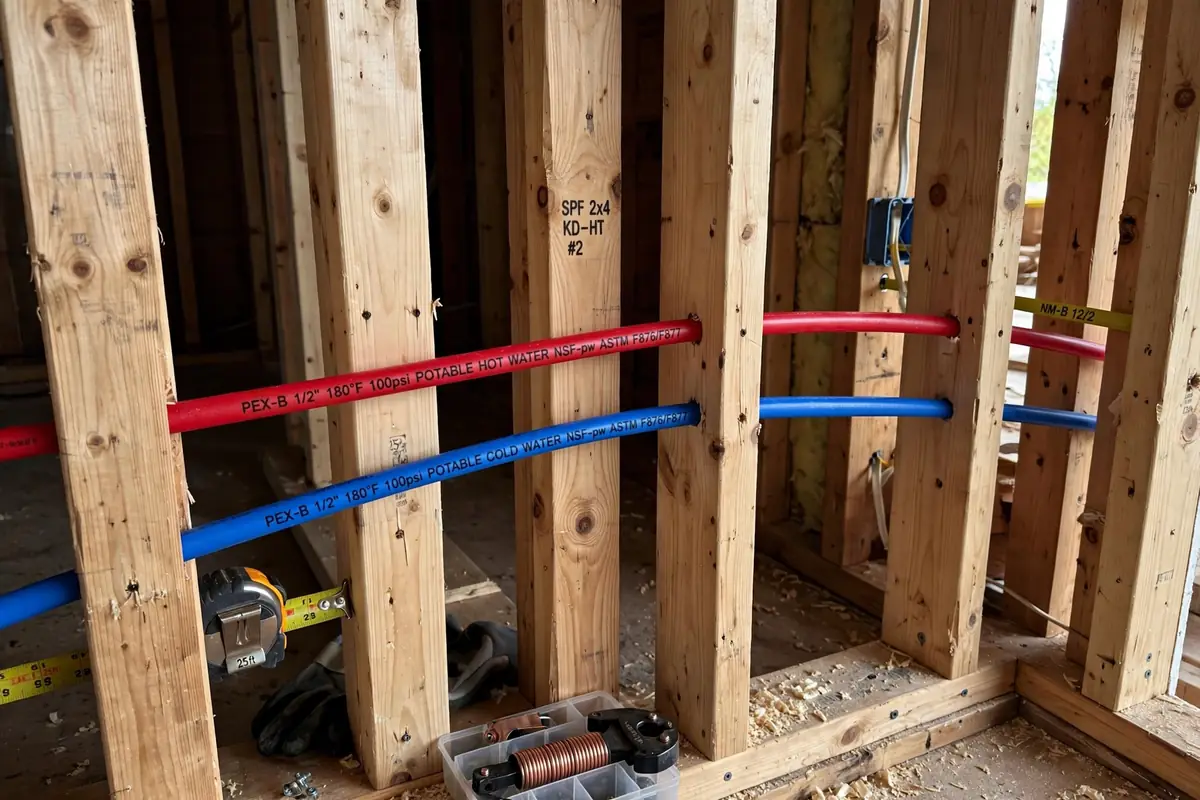
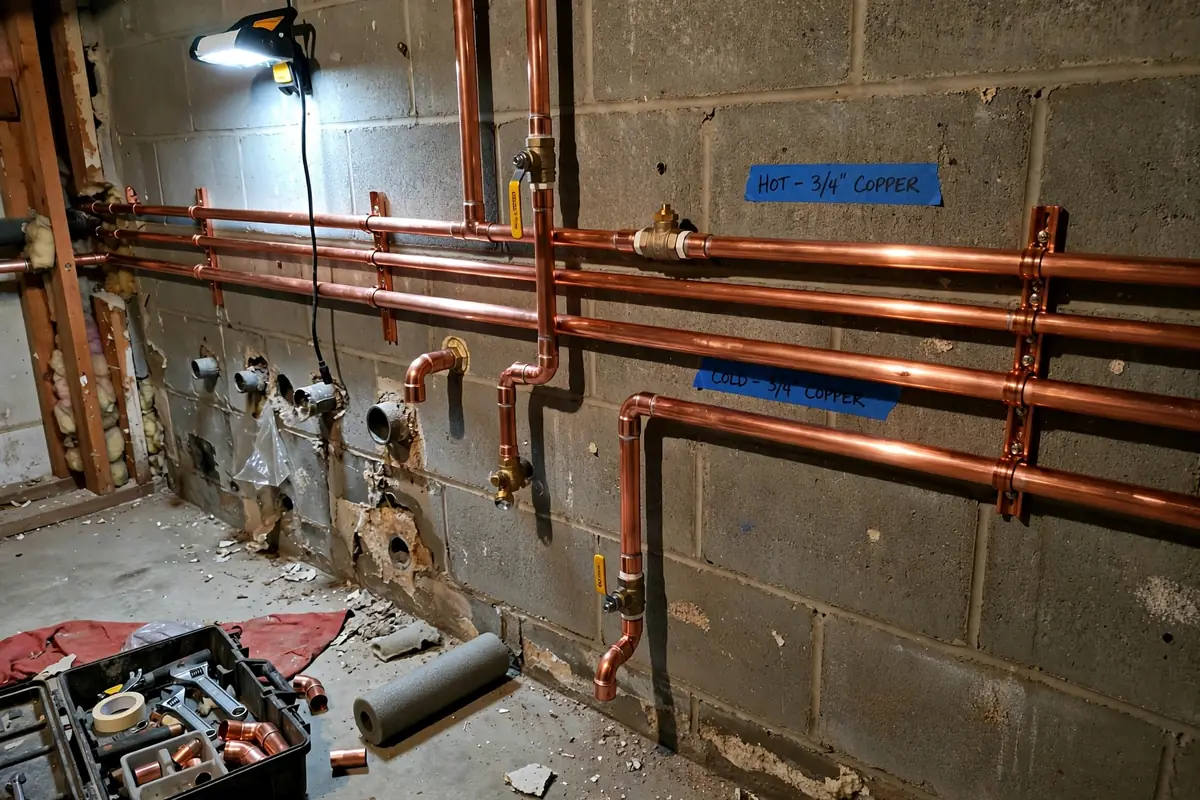
Modern repiping uses two proven materials. Copper pipe remains a durable standard, joined at each solder joint and well suited to exposed runs in garages, attics, and utility spaces. PEX is flexible tubing that bends around corners, needs fewer fittings inside walls, and handles the routing of older homes with less demolition. Many Carson repipes use both, copper where rigidity and exposure matter and PEX where flexibility speeds the work.
Old galvanized steel and failing lines are abandoned or removed as the plan requires, and every fixture gets reconnected with a new supply line and a working angle stop. The water pressure regulator at the main is checked as part of the job, since new pipe deserves correct pressure, and the main shutoff and any isolation valve added during the work give the homeowner real control over the new system from day one.
Choosing between copper and PEX is a house by house decision rather than a house rule. Water chemistry, attic heat, rodent history in crawl spaces, and the layout of bathrooms all play a part, and so does the simple question of where future access will be easiest if a fitting ever needs attention. Manifold style PEX layouts, where each fixture gets its own run from a central point with its own isolation valve, appeal to many homeowners for the control they offer, while traditional copper trunk lines suit homes where exposed routing and rigidity make maintenance straightforward for decades ahead.
A whole house repipe sounds disruptive, and planning is what keeps it manageable. The work is sequenced so water is restored at the end of each phase whenever possible, with kitchens and bathrooms, the highest use rooms, scheduled thoughtfully. In most Carson single story and two story homes, the new lines run through the attic, crawl space, or walls with access openings planned in advance.
Homes in neighborhoods near California State University, Dominguez Hills and across the city share similar construction eras, so experience with local housing stock helps predict where lines run and where access is easiest. Patch and finish of access openings are part of the conversation before work starts, so there are no surprises about what the walls will need after the plumbing is complete and pressure tested.
Daily life during a repipe is more workable than most homeowners fear. Crews protect floors along work paths, water shutoffs are scheduled rather than sudden, and the noisy opening work is grouped so quieter tasks fill the rest of the day. Pets do better in a closed room away from open walls, and a little preparation, clearing under sinks, moving stored items from garage plumbing walls, and planning laundry around water off windows, smooths every phase. By the final pressure test, most families in Carson and neighboring Gardena have settled into the rhythm and are mostly watching for the moment the new system comes fully online.
How long does it take to repipe a house? The plumbing phase for a typical home is measured in days rather than weeks, moving faster in single story homes with good attic or crawl access and slower in two story homes, larger homes, or homes where lines must route around finished spaces with limited access points.
Several factors shape the schedule: the number of bathrooms and fixtures, whether the service line from the meter also needs replacement, the condition of the slab and foundation where lines pass through, and whether drain lines in ABS, PVC, or cast iron are being addressed in the same project or left for a separate phase. Water and drain repiping are different systems, and a clear plan states which are included.
Before work begins, you should know the phase order, when water will be off each day, and when it returns. A hydrostatic pressure test on the completed new system, followed by a check of every fixture, angle stop, and supply line, closes the plumbing phase. Call (123) 456-7890 with your home size and leak history, and the likely scope can be outlined before an in person assessment.
What are the signs a house needs repiping? Recurring pinhole leaks in different locations lead the list, followed by rusty or discolored water, especially after the system sits unused, and steadily declining water pressure as galvanized steel narrows inside. Visible corrosion on exposed pipe in the garage or under sinks, and green staining from copper corrosion, add physical evidence to the pattern.
Age frames the whole picture. Original galvanized plumbing in a mid century South Bay home has outlasted its expected service, and early copper approaching the same decades deserves scrutiny when leaks begin. One leak in old pipe is a repair. A pattern of leaks in old pipe is a system telling you its condition honestly.
Not every aging system needs a full repipe at once. A partial repipe of the worst runs, or repiping one wing of a home, can be the right step when the rest of the system tests sound. The assessment should show you pressure readings, the condition of exposed sections, and the leak history laid out plainly, so the choice between repair, partial, and full repiping rests on evidence rather than pressure.
An aging water system also shapes daily life in quieter ways that a repipe resets. Showers that fade when a toilet flushes, laundry that fills slowly, and fixtures rationed one at a time are all symptoms of narrowed galvanized lines throttling flow to the whole house. Restored pressure and volume change the feel of the home at once, and they remove the background worry that the next leak is already forming inside a wall. That combination, reliability plus ordinary comfort returned, is why homeowners who repipe rarely describe the project as only a repair, even though preventing the next flood was the reason it began.
Straight answers before you call.
Describe what your pipes are doing and we will point you to the right next step.
Call (123) 456-7890Look at the pattern. Isolated leaks in otherwise sound pipe are repairs, while recurring leaks, rusty water, and falling pressure in aging galvanized or copper lines point to a system level replacement.
Both perform well. Copper suits exposed and rigid runs, while PEX routes flexibly through walls with fewer fittings, and many homes use a combination chosen for each location.
Water is shut off during active work phases and restored at planned points, usually at the end of each day. The schedule is explained before work begins so you can plan around it.
Supply repiping and drain replacement are separate systems. Your plan will state clearly whether ABS, PVC, or cast iron drains are included or recommended as a separate phase.
Old lines are capped and abandoned in place where removal would cause needless damage, or removed where access allows. The new system is fully independent and pressure tested.
Burst pipes shut off, located, and repaired fast, day or night.
Hidden leaks found with acoustic and thermal equipment, no guesswork.
Water extraction, drying, and cleanup after a pipe failure.
Camera inspection and repair for cracked, root filled, and collapsed sewer lines.
Call now and describe what is happening. We will take it from there.
Call (123) 456-7890