Professional water damage restoration for Carson and South Bay homes.
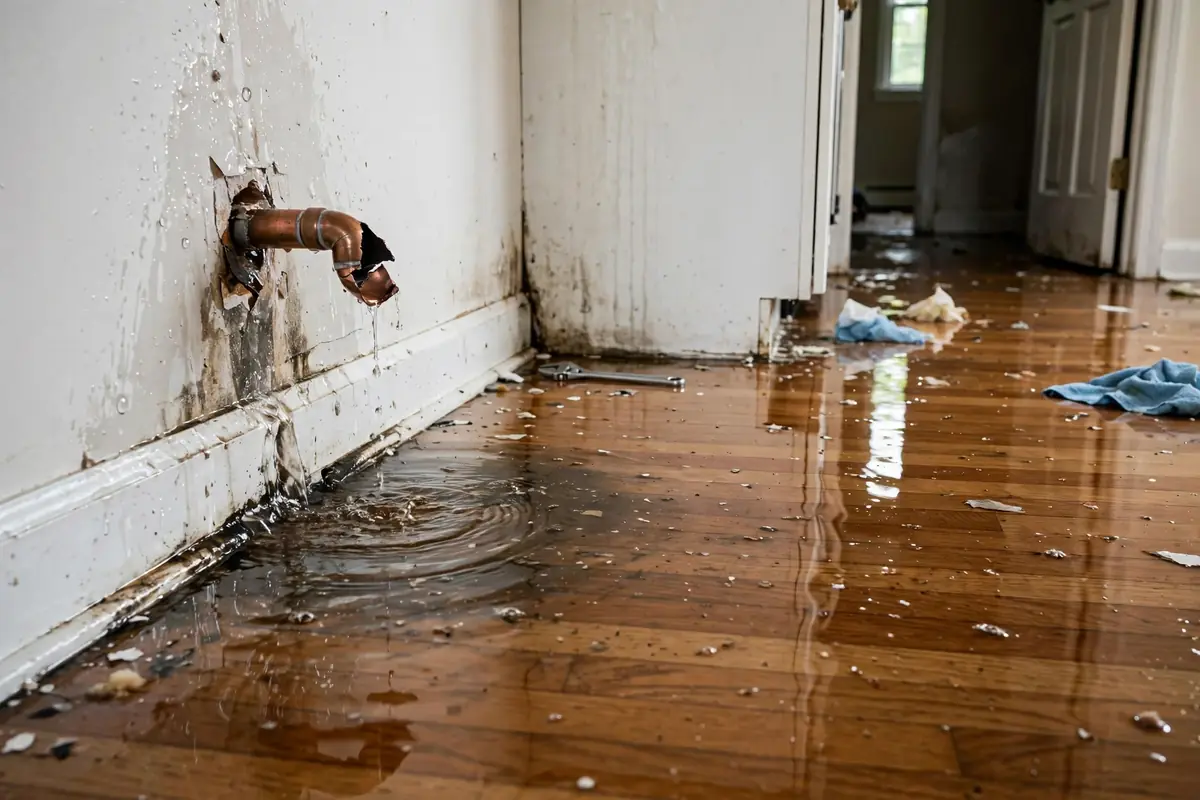
After a burst pipe or major leak in Carson, removing standing water is only the first step. Real restoration means drying walls, floors, and framing to verified moisture levels so mold and rot do not follow. Carson Pipe Pros coordinates plumbing repair and structural drying together. Call (123) 456-7890 as soon as water damage is discovered in your home.
The pipe repair ends the emergency, but it does not end the problem. Water that soaked into drywall, insulation, cabinets, and subfloor keeps spreading by capillary action long after the surface looks dry. In Carson homes, where many floor plans place kitchens and laundry rooms against shared walls, one burst supply line can wet two or three rooms from a single point.
Restoration starts with mapping, not guessing. A moisture meter is used across walls, floors, and baseboards to draw the true outline of the wet area, which is almost always larger than the visible stain. That map decides what gets dried in place, what materials have to come out, and where drying equipment is placed for the homes around South Wilmington Avenue, Dominguez, and the rest of the city.
Where the water came from shapes the response as much as how much arrived. Clean supply water from a burst copper pipe is the most forgiving source, while drain water and any water that passed through walls, soil, or a sewer line carries far more contamination and demands more protective cleaning. Water that sat for days before discovery is treated more seriously than water found within the hour, whatever its source, because time lets moisture migrate and microbes establish themselves in enclosed, dark spaces that surface cleaning never reaches during a quick homeowner cleanup attempt. The first visit sorts the source, the timeline, and the wet map together before equipment is placed.
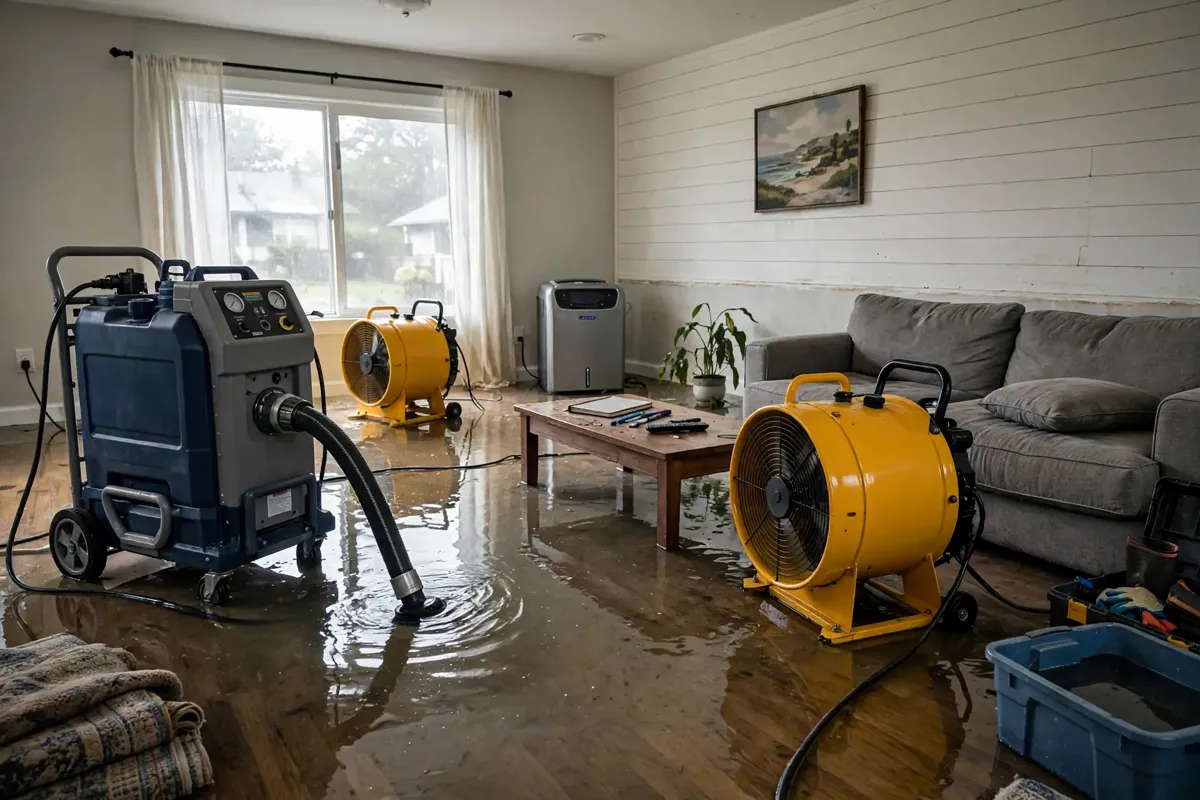
Drying a structure is controlled work. Standing water is extracted, wet baseboards may be removed to let wall cavities breathe, and air movers and dehumidifiers are set to pull moisture out of framing and subfloor in a steady, measured way. Readings are taken daily with a moisture meter and compared against dry material in an unaffected part of the same house.
Some materials recover well and some do not. Solid wood framing and tile over concrete often dry successfully, while soaked insulation, particleboard cabinets, and laminate flooring frequently cannot be saved once they have swollen or delaminated. Part of honest restoration is saying plainly which materials will return to normal and which need replacement, early enough that the plan and the drying setup reflect reality.
Drying is verified, not assumed, and the verification is recorded. Technicians log moisture readings by location each day, adjust air mover placement as edges dry faster than centers, and pull equipment only from areas that have reached target readings. Baseboards, toe kicks, and closet floors inside the wet outline get the same attention as the obvious damage, because overlooked pockets are where odor and mold complaints come from weeks later. When readings plateau above target, that plateau is information too, often pointing to a hidden reservoir of water behind a cabinet or under a second flooring layer that needs opening rather than more days of hopeful drying.
Kitchens and bathrooms suffer most because cabinets hide water. A slow leak at an angle stop or a failed supply line under a sink can saturate the cabinet floor and the wall behind it while the room still looks presentable. Restoration in these spaces includes checking inside cabinet bases, behind appliances, and along the wall and floor junction where water collects unseen.
Flooring tells its own story. Hardwood cupping, tile that sounds hollow where water undermined it, and vinyl lifting at seams each point to moisture below the surface. Addressing the plumbing source first, whether that is a burst copper pipe, a drain failure, or a water heater leak, is what makes the restoration last. Drying over an active leak is wasted work, so repair and restoration are sequenced together.
Contents need decisions alongside structure. Wet carpet padding usually cannot be dried reliably in place, upholstered furniture that soaked through requires careful evaluation, and boxes stored on a wet floor wick moisture upward into everything inside them. Moving contents out of the wet zone early, elevating what stays, and discarding what cannot be cleaned are unglamorous steps that protect both the home and the drying process. Rooms that share plumbing walls with a bathroom in neighboring Torrance and Carson homes often need checking even when their floors stayed dry, since water travels inside the wall cavity and emerges at baseboards rooms away from the original break.
How long does water damage restoration take? Drying alone often runs several days, because framing and subfloor release moisture slowly even with professional equipment running. A single room wet by a burst pipe dries faster than a multi room flood or a slab leak that saturated the foundation area and the flooring above it for weeks before discovery.
The full timeline includes more than drying. After moisture readings confirm the structure is dry, damaged drywall, insulation, cabinets, or flooring are repaired or replaced, and the plumbing access opening is closed and finished. Work that involved a sewer backup adds cleaning and sanitation steps before rebuilding begins, since that water carries contaminants clean water does not.
What speeds the process most is an early start. Water addressed promptly after a burst in a Torrance, Gardena, or Carson home gives drying the best chance to save materials. When you call (123) 456-7890, share when the leak started if you know it, which rooms are wet, and whether the source is already shut off. That information shapes the first visit.
During drying, expect daily contact and a simple rhythm: equipment runs around the clock, readings are taken and shared, and decisions about removing additional material are made from those readings rather than from impatience. Flooring that looked ruined on day one sometimes recovers as moisture leaves it, while a wall that looked fine can prove saturated inside, which is why experienced crews resist promising a finish date before the first full round of readings. What they can promise is visibility: you will know which areas are drying, which are not, and what happens next in each case, every day until the meters say the home is dry.
Can mold grow after a pipe burst? Yes, and it can begin quickly in warm, damp, enclosed spaces like wall cavities, under cabinets, and beneath flooring. Southern California indoor conditions after a flood, with wet drywall and limited airflow inside closed walls, give mold exactly what it needs if drying is delayed or incomplete.
Prevention is mostly about thoroughness: extract water fast, open wet cavities that cannot dry through the surface, run dehumidification until meter readings, not surface feel, confirm dryness, and remove materials that cannot be dried. A wall that feels dry to the touch can still hold moisture deep in the insulation, which is why verified readings close the job instead of a guess.
If a leak ran for a long time before discovery, as slab leaks and hidden supply line leaks often do, the restoration visit includes checking enclosed spaces carefully for growth that started before the repair. Knowing the full condition early lets the plan cover remediation and rebuilding in the right order, rather than discovering growth after new drywall has already gone up.
Once a home is dry and rebuilt, prevention closes the loop. The plumbing failure that caused the damage should be fully understood, whether it was a worn supply line, a failed water heater, or a slow angle stop leak, and similar fittings elsewhere in the house deserve inspection while the lesson is fresh. Replacing tired washing machine hoses, adding pans under heaters where practical, and knowing the main shutoff location turn a bad week into lasting protection. Homeowners who have lived through one flood rarely need convincing, and a short walkthrough of the whole system after restoration is time well spent before normal life resumes.
Straight answers before you call.
Describe what your pipes are doing and we will point you to the right next step.
Call (123) 456-7890Stop the source with the main shutoff if it is still running, move belongings out of the wet area, and call (123) 456-7890. Avoid walking through water near electrical outlets or fixtures.
Sometimes, if it is dried promptly and has not crumbled or grown mold. Insulation behind it often needs replacement even when the drywall surface survives.
Moisture meter readings are compared to dry material elsewhere in the home. Drying equipment runs until those readings match, not until surfaces merely feel dry.
The plumbing source must be repaired as part of the process, since drying over an active leak does not work. Repair and drying are planned together from the first visit.
Sewer water needs cleaning and sanitation steps before drying and rebuilding, because it carries contaminants. Tell us the source when you call so the right precautions are planned.
Burst pipes shut off, located, and repaired fast, day or night.
Hidden leaks found with acoustic and thermal equipment, no guesswork.
Camera inspection and repair for cracked, root filled, and collapsed sewer lines.
Snaking and hydro jetting for drains that keep slowing down or backing up.
Call now and describe what is happening. We will take it from there.
Call (123) 456-7890