Pinpoint the Source Before Anything Else
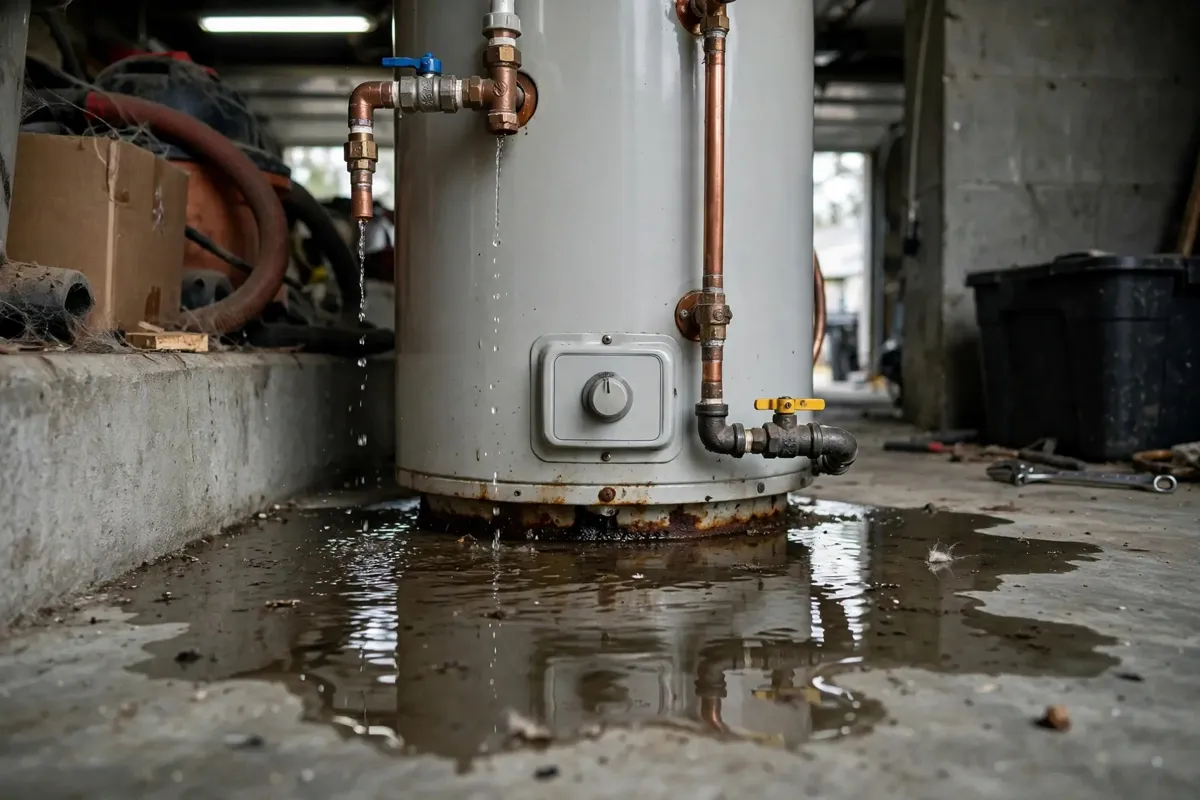
Water pooling under a water heater does not always mean the tank has failed. The leak might come from the temperature and pressure relief valve on the side, the drain valve at the bottom, a supply line connection on top, or condensation in humid weather. Dry the area completely, then watch where the first new water appears. Water dripping down the side from the relief valve discharge pipe points one direction. Water welling from under the unit, or rust streaks and bubbling paint low on the tank body, point to the tank itself. This five minute observation is the most valuable thing you can do, because the source, not the puddle size, decides whether you face a small repair or a replacement.
The Temperature and Pressure Relief Valve
The T&P valve is a safety device that opens to release water if temperature or pressure inside the tank climbs too high, and it discharges through a pipe running down the side of the heater. A valve that drips steadily can mean it is doing its job because pressure in the system is genuinely too high, often from thermal expansion in a closed system, or it can mean the valve itself has weakened with age and mineral buildup and no longer seals. Never cap or plug the discharge pipe: a blocked relief valve removes the heater's last line of defense. Testing the valve by briefly lifting its lever is a standard check, but a valve that will not reseat afterward will keep dripping, which is itself useful information for the technician.
Drain Valves, Connections, and Condensation
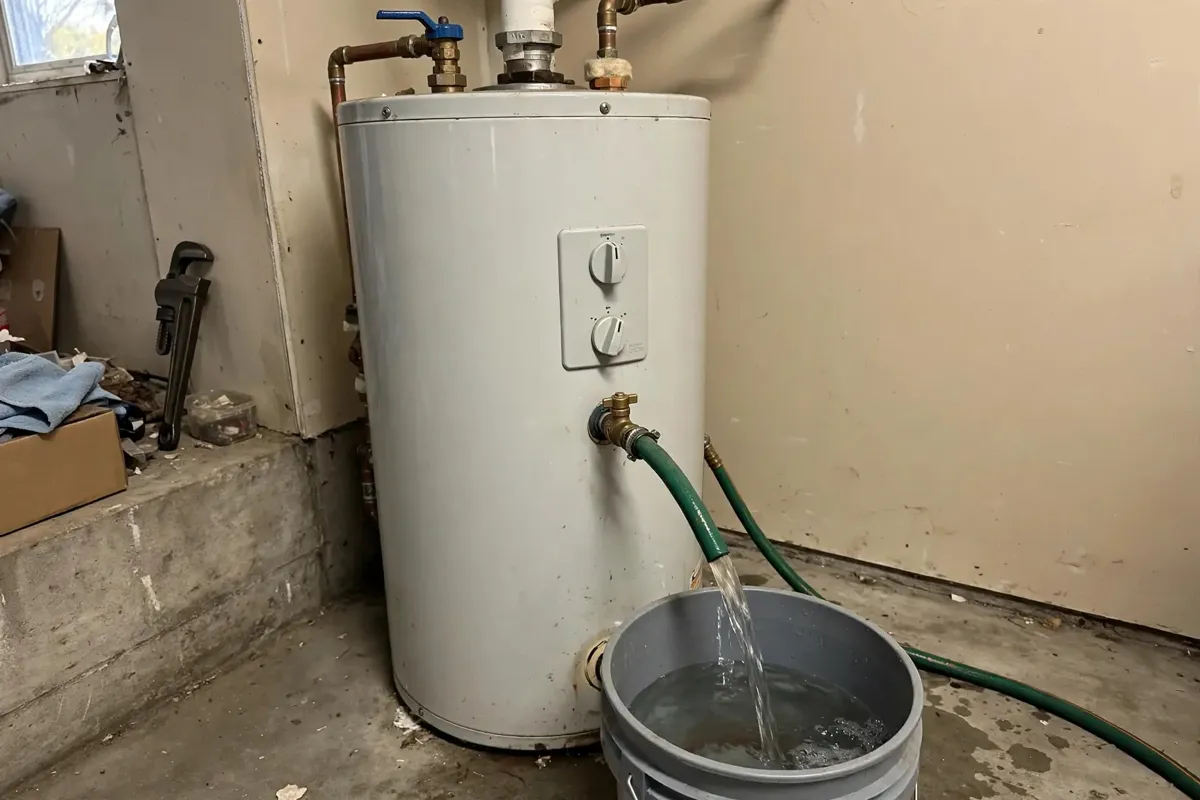
The drain valve at the base of the tank, used for flushing sediment, is a humble part with plastic or brass construction that can start weeping, especially after being opened for the first time in years. A slow drain valve drip is usually a contained problem. Connections on top of the heater deserve a look too: supply line fittings and dielectric unions corrode, and a slow leak there drips down and masquerades as a tank failure. In cool garages, condensation on a cold tank on humid days can also mimic a small leak. Wiping the tank dry and watching closely separates real leaks from sweat, and hard water sediment inside the tank often announces itself separately with rumbling or popping sounds during heating.
When the Tank Itself Has Failed
A tank that leaks from its body has reached the end. The inner steel tank is glass lined, and once that lining cracks and water reaches the steel, rust works through until the wall weeps, then drips, then splits further. There is no patch for a failed tank wall, and the leak will not stabilize: it grows. Signs include rusty water from hot taps, rust stains at the base seam, and moisture that returns no matter how often you dry the pan. At that point the work shifts from repair to planning a replacement, including capacity for the household, venting for gas models, and bringing connections up to current standards. Knowing the age of the unit, usually printed on its rating label, helps confirm the diagnosis.
Safety Steps While You Wait
While the diagnosis comes together, protect the house. Shut off the cold supply line to the heater using the valve on top of the unit, switch off the breaker for an electric heater or set a gas unit to pilot, and drain the tank only if it can be done safely through the drain valve with a hose to a safe outlet, remembering the water is hot. Move stored items out of the wet area, especially in Carson garages where boxes often sit directly on the slab around the heater. Photograph the leak and the rating label. Then call Carson Pipe Pros at (123) 456-7890 with the source of the leak and the unit's age, and the visit starts halfway to solved.
If the heater sits in a drain pan, check whether the pan itself is draining or simply holding water against the tank base. A clogged pan drain leaves the bottom of the unit sitting in water and rusts it from the outside. Clearing that small drain line is easy once you notice it, and it keeps a minor drip from quietly becoming the tank failure you were trying to avoid.
Questions About Water Heater Leaking
Which water heater leaks can safely wait until morning?
A slow drip from the temperature and pressure relief valve, or a fitting that only weeps while the unit heats, can usually wait if you set a pan under it and check it once before bed. What cannot wait is water pooling from the tank body itself, a leak anywhere near the electrical connections, or water arriving fast enough to hear. When in doubt, close the cold supply valve on top of the unit and call (123) 456-7890.
Why is my relief valve dripping?
Either system pressure or temperature is climbing too high, or the valve has weakened and no longer seals. Both deserve a professional check, and the discharge pipe must never be capped.
Can a leaking tank be repaired?
No. A leak through the tank wall means the tank has rusted through, and replacement is the only durable option.
How long do water heaters usually last?
Service life varies with water quality, usage, and maintenance. Hard water and heavy sediment shorten it, and the rating label shows the unit's age for reference.